

Evolve casino Plinko game
Introduction
Plinko looks almost too simple to deserve a long analysis. A ball drops from the top of the board, bounces through a field of pegs, and lands in a payout slot at the bottom. That is the entire visual premise. Yet in practice, Evolve casino Plinko creates a very specific kind of gambling session: fast, transparent on the surface, but capable of producing sharply different outcomes depending on how the player sets risk, rows, and stake size.
I find that this is exactly why the format keeps attracting attention in Canada and beyond. It removes the visual noise that often comes with video slots and strips the experience down to timing, randomness, and payout distribution. There are no expanding wilds, no top Evolve Casino bonus rounds to chase, and no complicated paytable to decode. Instead, the tension comes from a much more direct question: where will the ball land this time, and what does that mean over a real session rather than a single drop?
This is where a proper review matters. Plinko is often presented as an easy pick-up-and-play casino game, but that description only covers the first minute. Once real money is involved, the important questions are different. How does the board logic work? What changes when I switch from low risk to high risk? Why can the session feel calm one moment and brutally swingy the next? And most importantly, who is this format actually suitable for?
In this Evolve casino Plinko review, I will stay focused on the game itself: its mechanics, pace, probability profile, strengths, limitations, and practical value for players who want to know what to expect before they hit the first drop.
What Plinko is and why it stands out so quickly
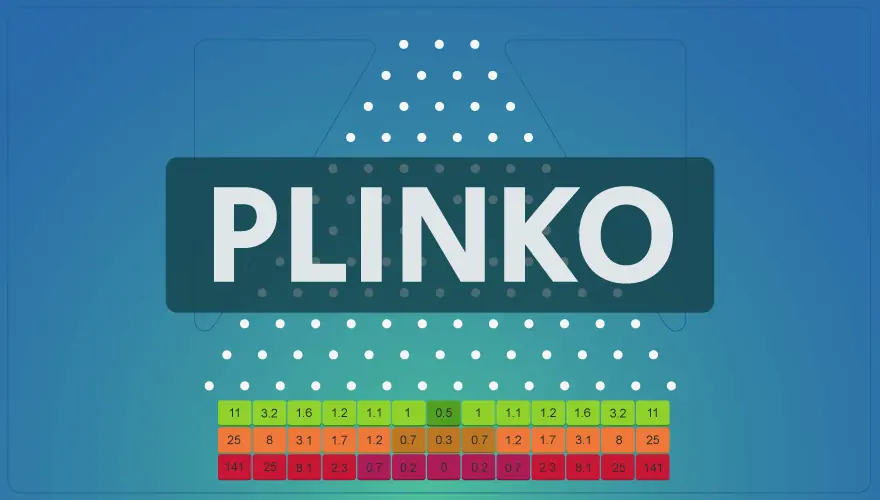
At its core, Plinko is a chance-based casino game built around a vertical board. The player chooses a stake, usually selects a number of rows and a risk level, then releases a ball from the top. As the ball collides with pegs, it changes direction many times before settling into one of the multiplier slots at the bottom. The final multiplier determines the return on that drop.
That description sounds basic, and visually it is. But the format stands out because it turns randomness into something the player can watch unfold in real time. In a slot, the result is effectively determined by the random number generator before the reels finish spinning. In Plinko, players still face RNG-driven outcomes, but the path is shown in a way that feels more tangible. You are not just waiting for symbols to stop. You are following a sequence of deflections that creates anticipation with every bounce. Those comparing loyalty perks can weigh this section against best chicken road page at Evolve Casino.
This visible journey matters more than many people realize. One reason Plinko became so noticeable is that it creates a strong illusion of closeness. A ball can drift toward a high multiplier, hover near the edge, then fall back into a modest return. That moment has a very different emotional texture from a slot spin that simply misses a payline. The board makes near-misses feel physical.
Another reason for its visibility is speed. A single round resolves quickly, and the rules are understood almost instantly. That low barrier to entry makes Plinko approachable for casual players, while the adjustable risk settings give experienced users enough control to shape the session. In other words, it looks simple for beginners but still allows meaningful strategic choices in how variance is approached.
One of my strongest observations after studying Plinko across modern gambling platforms is this: the game does not ask the player to learn a complex system, but it absolutely demands discipline. The simplicity of the interface can hide how quickly a session can accelerate.
How the Plinko board actually works in a live session
To understand Evolve casino Plinko properly, it helps to separate the visible board from the mathematical structure underneath it. The player sees a ball bouncing left and right through pegs. Underneath that animation is a payout map shaped by the number of rows and the selected risk profile. Players who value quick withdrawals will find real timings in Evolve Casino Aviator crash game overview for players.
In most versions of Plinko, the board is symmetrical. The center slots at the bottom tend to appear more often because there are more possible paths leading there. The outer edges, where the biggest multipliers usually sit, are much harder to reach. This is not a flaw in the design. It is the entire point of the game’s payout logic.
Each drop is independent. The previous result does not make the next edge landing more likely. This is important because Plinko can tempt players into pattern hunting. A run of central landings may create the impression that the high multiplier is “due,” but the game does not work that way. The board presents movement, but it does not create a memory.
Most Plinko versions also let the player adjust key parameters. These settings directly affect the feel of the session:
| Setting | What it changes | What it means in practice |
|---|---|---|
| Stake size | The monetary value of each drop | Higher stakes amplify both short dry spells and rare large returns |
| Number of rows | The depth of the board and payout spread | More rows often create wider multiplier distribution and stronger suspense |
| Risk level | How aggressively payouts are distributed | Low risk gives more stable results; high risk increases the chance of sharp swings |
| Auto-play or repeated drops | The pace of consecutive rounds | Can turn a simple session into a fast bankroll drain if not managed carefully |
The practical takeaway is straightforward: Plinko is not one fixed experience. A low-risk, modest-row setup can feel controlled and almost meditative. A high-risk configuration with repeated drops can feel closer to a volatility test than a casual casino session.
How movement, risk levels, and session dynamics shape the experience
The most useful way to think about Plinko is not as a single game mode, but as a framework. The same board can behave very differently depending on how the payout distribution is tuned. That is where risk levels become central.
In low-risk mode, the board is usually weighted toward smaller, more frequent returns. This does not mean guaranteed profit or even frequent net-positive drops. It means the multiplier map is less extreme. You are more likely to land in middling zones and less likely to see either crushing dead drops or very large hits. For players who want longer sessions and less emotional whiplash, this setting is usually the most manageable.
Medium risk tends to create a more balanced rhythm. The center still does most of the work, but the spread becomes more meaningful. You may see enough moderate returns to stay engaged, while still having some realistic access to stronger multipliers. For many players, this is where Plinko feels most readable without becoming dull.
High risk changes the psychology of the session. Here, the board becomes much less forgiving. A large share of results may cluster around weak returns or losses relative to the stake, while a small number of edge landings carry the appeal of outsized multipliers. This is the version of Plinko most often highlighted in clips and streams, because it produces dramatic moments. It is also the version most likely to punish players who mistake excitement for value.
That distinction matters. The game’s outer simplicity can fool people into thinking the only variable is luck. In reality, the player is also choosing the shape of that luck. A high-risk board is not just “more exciting.” It is a deliberate move toward rarer but more explosive outcomes.
Here is a practical way to read the rhythm:
Low risk: smoother flow, fewer shocks, better for testing the format and managing session length.
Medium risk: more varied returns, often the easiest setting for understanding how Plinko behaves over time.
High risk: long stretches of underwhelming landings can be broken by rare spikes, which makes bankroll control essential.
A memorable thing about Plinko is that the board can look calm while the bankroll graph is not. That contrast is one of the game’s defining traits. The animation is almost playful; the financial swings can be anything but.
Why the game feels engaging even when the rules are minimal
Plinko holds attention for reasons that are more psychological than decorative. Unlike slots, which often rely on theme, sound design, and layered bonus structures, Plinko creates engagement through repeated micro-suspense. Every peg collision extends uncertainty by a fraction of a second. The player is not waiting for a reveal; the reveal is unfolding step by step.
This leads to a session style that can feel unusually “clean.” There is less visual clutter, fewer secondary systems, and a much shorter distance between action and result. For some players, that directness is refreshing. For others, it can become repetitive because the format offers little narrative variation from one drop to the next.
The game also benefits from perceived control. Even though the outcome remains random, settings such as rows and risk levels give the player a sense of shaping the session. That sense is valuable, but it should not be exaggerated. Choosing a different risk mode changes the payout profile, not the house edge in any magical way. It affects how results are distributed, not whether randomness can be outsmarted.
Another practical reason Plinko remains sticky is that it compresses emotional cycles. In a slot, a feature round may take time to trigger. In Plinko, anticipation starts immediately and resets just as fast. This makes the game highly bingeable. It also means players can rack up a large number of rounds before fully registering how much they have staked.
How risky Plinko really is and which players it suits best
Plinko can be mild or severe depending on the chosen settings, but I would not describe it as a naturally low-pressure format just because it looks simple. The risk profile can become aggressive very quickly, especially when high multipliers are placed at the far edges and the player increases both stake size and drop frequency.
What matters most is not whether the game has big top-end multipliers, but how often ordinary outcomes sit below break-even. That is the practical issue in real sessions. A player may see many drops that return something, yet still lose steadily if those returns are consistently smaller than the original stake. This is one of the easiest traps for inexperienced users: small returns can feel like success even when the bankroll trend says otherwise.
Plinko tends to suit players who:
prefer fast results over long reel animations or feature hunts;
like transparent formats where payout zones are visible before the round starts;
are comfortable adjusting risk and understanding what that choice means;
can keep discipline in a high-tempo environment.
It may be a weaker fit for players who:
want extended bonus rounds, symbol combinations, or thematic immersion;
dislike repeated low-value outcomes while waiting for a bigger hit;
tend to chase losses in rapid-fire formats;
prefer games checks before using Evolve Casino where pacing is naturally slower.
If I had to summarize the real risk in one sentence, it would be this: Plinko often feels easier to control than it actually is.
What players should understand about probability and expected results
Probability in Plinko is easier to visualize than in many casino games, but that does not make it easy to interpret correctly. The center of the board usually has the highest hit frequency because there are more possible left-right combinations that end there. The edges are mathematically rarer, which is why they can carry the largest multipliers.
This creates a classic distribution pattern: common modest outcomes, uncommon strong outcomes, and very rare standout results. The exact numbers depend on the version offered at Evolve casino, but the broad logic remains the same. The board is built so that the most eye-catching rewards sit where the ball is least likely to land.
For the player, this means three things:
A few exciting drops do not define the session. The result that matters is the aggregate over dozens or hundreds of rounds.
Near-misses are part of the experience, not a signal. A ball brushing past a premium slot does not indicate rising probability on the next drop.
Frequent partial returns can mask net loss. It is important to judge performance by bankroll movement, not by how often the board pays something back.
This is also where RTP, if listed for the specific Plinko version, should be read carefully. A theoretical return percentage describes long-term mathematical expectation, not the likely outcome of one evening. In a highly variable setup, actual short-session results can sit far above or far below the theoretical average.
My second standout observation is that Plinko teaches variance more honestly than many flashy casino products do. It does not hide the distribution behind storylines or bonus theatrics. You can see, almost literally, how hard it is to reach the edges.
How Plinko differs from slots and other common casino formats
The cleanest comparison is with online slots, because many players arrive at Plinko expecting a similar rhythm. In reality, the two formats feel very different once money is on the line.
| Aspect | Plinko | Classic online slots |
|---|---|---|
| Core visual logic | Ball path through pegs to payout slots | Reels, symbols, paylines or ways-to-win |
| Main source of suspense | Visible descent and final landing position | Spin outcome, symbol alignment, bonus triggers |
| Session pace | Usually very fast and repetitive | Varies, often slower due to animations and features |
| Complexity | Low entry complexity, high importance of risk settings | Higher rule complexity depending on features |
| Player focus | Distribution of outcomes and volatility choice | Features, symbols, bonus rounds, hit frequency |
Compared with roulette, Plinko shares the appeal of visible probability zones, but the feel is different. Roulette is immediate and static: the wheel spins, the ball lands, the bet resolves. Plinko stretches that uncertainty through the descent. Compared with crash games, Plinko is less about deciding when to cash out and more about accepting a fixed randomized path. Compared with Evolve Casino roulette before making a deposit such as blackjack, it offers far less room for decision-making after the round begins.
What makes Plinko distinct is that it combines visual simplicity with a surprisingly strong volatility identity. That combination is unusual. Many games are either simple and flat, or complex and high-drama. Plinko manages to be simple and swingy at the same time.
Where the game performs well and where it can disappoint
No serious review of Evolve casino Plinko should treat the format as universally appealing. It has clear strengths, but they are tied to equally clear limitations.
Its strongest qualities are practical rather than cosmetic. The rules are easy to understand. The board shows the payout landscape directly. Risk settings can materially change the session. And the game produces quick results without forcing the player through heavy interface clutter.
Those are real advantages, especially for users who want a direct gambling format. But there are trade-offs. Plinko does not offer much thematic depth. It can feel repetitive over long stretches. And because rounds resolve so quickly, it can encourage passive repetition rather than deliberate play.
Here is a balanced view:
Strong side: fast learning curve, transparent structure, adjustable variance, immediate feedback.
- Strong side: rewarding streaks feel satisfying when variance swings your way.
Grey area: the simplicity is either a benefit or a drawback depending on what the player wants from a session.
The third observation I would highlight is this: Plinko can feel fairer than many slots because the board shows you where the danger lives. That feeling is useful, but it should not be confused with reduced gambling pressure. Transparency of layout does not eliminate volatility.
What to check before launching Evolve casino Plinko
Before starting a session, I recommend looking at the setup more carefully than the interface seems to require. This is not a game where the absence of complex rules means the absence of important choices.
First, check whether a demo mode is available. Even a short trial is useful because it helps you understand how different row counts and risk levels change the texture of results. Second, decide in advance whether you want a low-intensity session or a high-variance one. If you do not make that choice consciously, the game can make it for you through impulse adjustments.
Third, watch the relationship between stake and speed. A modest bet can still become expensive if you let the drops run continuously. Auto-play is convenient, but it also reduces the natural pause that helps players evaluate results. Fourth, if the game displays RTP or multiplier tables, read them. The information is not decorative. It tells you how the board is structured.
Most importantly, judge the session by overall bankroll movement rather than isolated highlights. Plinko is excellent at producing memorable single moments. It is less forgiving when players build their expectations around those moments alone.
Final verdict on Evolve casino Plinko
Evolve casino Plinko offers a very specific gambling experience: quick rounds, visible randomness, adjustable risk, and a format that looks simple but can produce sharply different outcomes depending on how it is configured. Its key strength is clarity. You can understand the board in seconds, and you can see where the modest returns sit and where the rare big multipliers live. That directness is a genuine advantage.
At the same time, the game deserves more respect than its minimalist design suggests. The real tension in Plinko is not hidden in bonus features or complicated rules. It sits in distribution, pacing, and the gap between frequent small outcomes and rare large ones. Low-risk setups can make the session feel measured. High-risk settings can turn the same board into a much harsher proposition.
For players who enjoy fast decision-light casino games and are comfortable with variance, Plinko can be a strong choice. For those who want narrative depth, slower pacing, or more involved gameplay, it may feel too repetitive or too exposed in its randomness. That is not a flaw. It is simply the nature of the format.
If I had to sum it up plainly, I would say this: Plinko is worth trying if you want a clean, high-clarity casino game where every drop is easy to follow but not easy to predict. Its strengths are speed, transparency, and flexible risk. The caution point is equally clear: the same simplicity that makes it accessible can also make it deceptively easy to overplay.
FAQ
How does a Plinko ball drop work on the official casino site?
A ball is launched from the top and bounces through the pegs until it lands in one of the result slots. Each slot corresponds to a multiplier that applies to the selected stake.
What should be checked before launching a real-money Plinko round?
Confirm the game mode shows real-money play, not demo mode. Then verify the stake size and that the current table limits are compatible with the deposit status on the account.
Why does the Plinko page sometimes load with fewer options or show an unavailable lobby?
A working mirror can differ from one network to another, and the lobby may change when access to casino games is restricted. Refresh the page, check the selected mirror indicator, and try another connection route if the game still fails to launch.
Which table limits should be reviewed before changing stake on Plinko?
Table limits control the minimum and maximum stake per round on the current Plinko game board. If the chosen amount is outside the allowed range, the round may not start until the stake is adjusted.
What happens if a bonus code, promo code, or free spins offer is shown, but Plinko does not activate it?
Bonus activation rules can be limited to eligible game types or specific modes. Check the promotion terms in the offer details area, confirm the game mode matches the requirement, and ensure the promo code was applied to the correct deposit or action before play.
What should returning players check about their Plinko session after logging in again?
Look for changes in table limits, because limits can update based on account status. Also confirm the selected stake and demo vs real-money mode, since the game may reset when switching mirrors or after a new login.
How should a player switch from demo mode to real-money play on Plinko?
Select the real-money mode on the Plinko game area, then ensure the account has an available balance for the chosen stake. If a deposit is needed, use the cashier deposit flow and return to the game after the balance is updated.